Yes, college counseling should include career counseling
By Daryl CapuanoGeneral Education AdviceMy work in career counseling emanated from a mission to help young people transition into adulthood. Historically, the handoff from high school to college put parents at ease, because they assumed that from there, the kid would either figure it out or a job would be waiting for them on the other end. Neither is true anymore. I’m not sure it was ever quite as true as people believed, but certainly over the last decade, this has proven decidedly false — students neither “figure it out” on their own nor find jobs waiting for them in abundance.
What they need, even before they head to college, is at least a thematic understanding of the careers that might be available to them — or at minimum, the beginning of a career education. I’ve had countless conversations with students about jobs or industries that parents assume are obviously understandable, only to discover the young person has almost no idea about anything outside of what they’ve personally seen. If your child is interested in becoming a police officer, a firefighter, a nurse, a doctor, or a teacher, they at least understand the generalities of the job from having observed it up close. Outside of those visible, everyday professions, understandably, most students are mostly clueless.
The Four-Year Interview: Rethinking How Connecticut Students Prepare for Life After College
Most “college to career” advice follows the same script: pick a major that leads to a good job, build a resume, visit the career center senior year, network at graduation. It’s not wrong, exactly — it’s just backwards. By the time students are thinking seriously about careers, they’ve often already spent three years making decisions that quietly foreclosed options they didn’t know they had.
Here’s a more useful way to think about it, one I’d want every family I work with in Connecticut to hear before senior year even starts: college isn’t the four years before a career begins. It’s the first four years of the career itself. Every class, internship, and even social choice is either building capital toward something or it isn’t. Treating college as a holding pattern before “real life” starts is the single biggest waste of the experience.
Start With the End, Not the Major
The conventional question is “What should I major in?” The more useful question is “What do I want to be able to do, and who do I want to be able to talk to, by graduation?”
This isn’t about forcing a 17-year-old to pick a career. It’s about reframing the goal. A psychology major who spends four summers in unrelated retail jobs graduates with a psychology degree and four years of retail experience. A psychology major who spends those same summers in a research lab, a nonprofit serving at-risk youth, and a HR department graduates with a psychology degree and three distinct professional narratives to choose from. Same major, wildly different outcomes — and the difference was never the classroom.
For Connecticut students specifically, this matters because our state has an unusual density of small, sophisticated employers — insurance and financial services in Hartford, healthcare systems, biotech clusters near New Haven, a robust nonprofit and arts sector along the shoreline. Most of these employers never show up at big campus career fairs. They hire through relationships. Which leads to the second reframe.
Networking Isn’t Schmoozing — It’s Research
Students (and honestly, a lot of parents) hear “networking” and picture something transactional and a little gross: working a room, asking for favors. That’s not what actually works, and it’s not what I’d encourage any student to do.
What works is informational interviewing as a form of academic curiosity. A student who emails five alumni working in fields that sound interesting — not to ask for a job, but to ask “what does your Tuesday actually look like?” — learns more in five conversations than in a semester of career-services workshops. It also does something more important: it turns an abstract, anxiety-inducing question (“what will I do with my life?”) into a series of small, low-stakes, concrete conversations. That’s a nervous-system win as much as a career one.
I’d encourage every family to set a simple standard: one real conversation with a working professional per semester, starting freshman year. By senior year, that’s eight conversations, eight people who remember the student, and eight informal windows into industries no brochure could describe accurately.
The Skills Employers Actually Ask For Aren’t the Ones on the Syllabus
Having spent years on both sides of high-stakes institutional decisions — as a prosecutor, then in SEC enforcement — I can tell you that almost nothing I do today draws on the substantive law I memorized. What I use constantly: the ability to write a clear paragraph under time pressure, to synthesize a mess of information into a decision, to have a hard conversation without flinching from it.
That’s not unique to law. Employers across every field consistently rank the same handful of things above technical knowledge: written communication, the ability to work through ambiguity, and basic professional reliability (showing up prepared, following through, owning mistakes). None of these are taught in a required course. All of them are trainable — through campus jobs, through leadership in a club that actually has stakes (not just a title), through the unglamorous experience of managing a difficult group project to completion.
The practical implication for a college-to-career plan: choose experiences that force you to produce something and be accountable for it, not just experiences that look good on paper. A part-time job where a student has to solve real problems for real customers often builds more career capital than an unpaid “prestige” internship spent making coffee and copies.
Redefine What Counts as a Win
Here’s the piece that’s genuinely underdiscussed: the transition from college to career is not supposed to be linear, and treating a winding path as a failure creates exactly the kind of anxiety that makes students freeze up instead of explore.
A student who tries pre-med, discovers in organic chemistry that it isn’t for them, and pivots to public health hasn’t wasted two years — they’ve eliminated an option with real information instead of hypothetical fear, which is a faster and cheaper way to find the right fit than staying safely undecided. The families I work with who navigate this best are the ones who’ve agreed, explicitly, that changing direction based on real evidence is a sign of good judgment, not a setback.
A Practical Framework for the Next Four Years
For students and families who want something concrete to work from, I’d suggest a simple yearly rhythm:
- Freshman year: Explore widely. Take one class purely out of curiosity. Have two informational conversations. No pressure to know anything yet.
- Sophomore year: Narrow slightly. Take on one role with real responsibility (campus job, club leadership, research assistant). Start noticing what kind of work energizes you versus drains you.
- Junior year: Test it in the real world. This is the internship year — ideally one that’s uncomfortable enough to teach you something, not just resume-friendly.
- Senior year: Convert relationships into opportunities. By now, the alumni you’ve talked to, the supervisors you’ve impressed, and the skills you’ve built should be doing most of the work — the job search becomes a formality, not a cold start.
The Bigger Point
The families who navigate this transition best aren’t the ones with the most polished five-year plan. They’re the ones who understand that career readiness is built cumulatively, through small, repeated acts of curiosity and accountability — not manufactured senior year in a two-week resume-writing sprint.
That’s the shift I’d want every Connecticut student and parent to make: stop asking “what’s my plan for after college?” and start asking “what am I building right now that I’ll be glad I built later?” Answered honestly, four times a year, for four years — that question does more for a career than any major ever will.
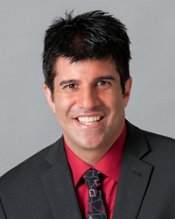
CEO, The Learning Consultants and Connecticut’s top private education consultant
full bio